Protocol
HL7 v2
ORU result messages and ORM orders over MLLP or raw TCP. Inbound and outbound: Catenix both receives results and sends orders back to a LIS or EHR.
ORU^R01 · ORM^O01 · ACK
Home / Devices
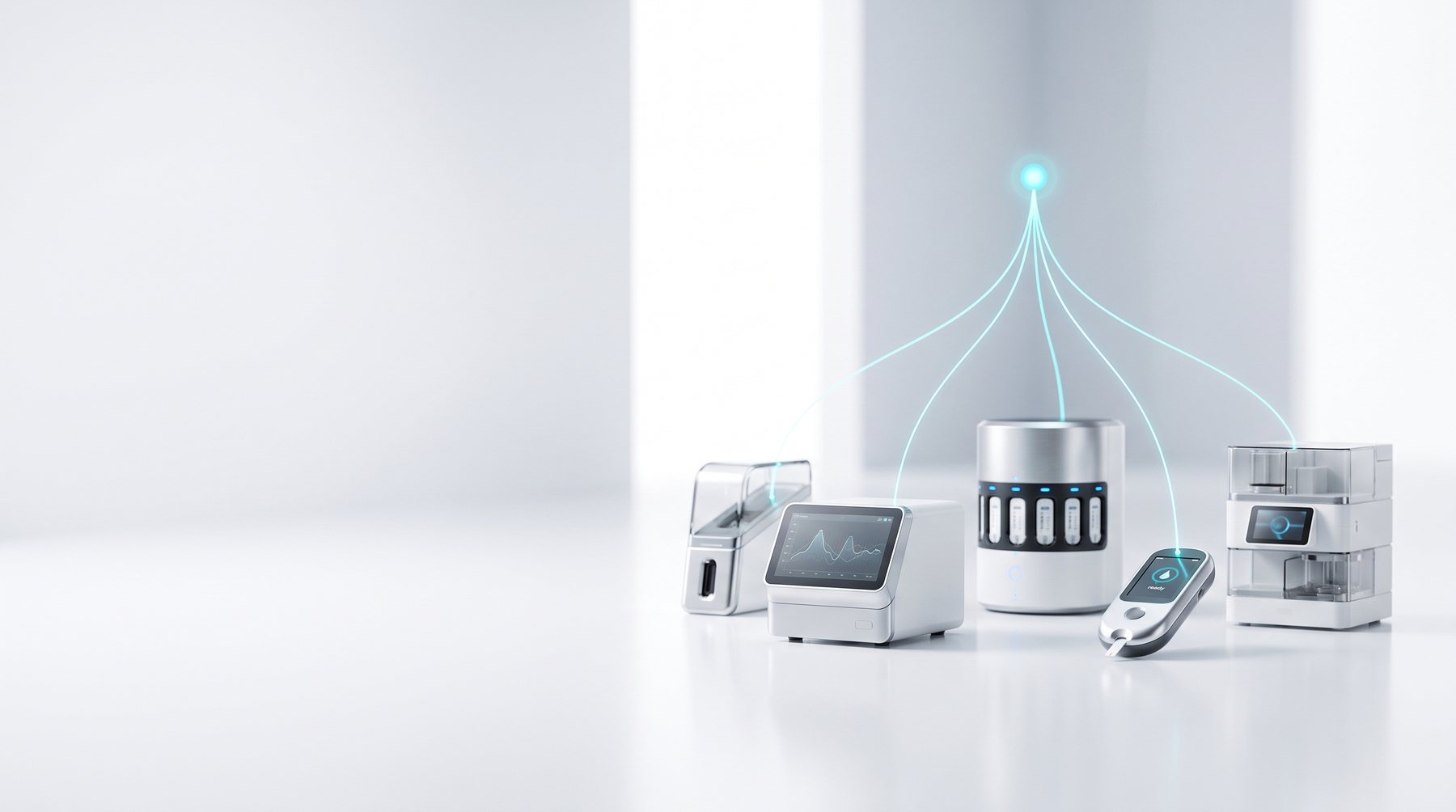
Open by design. From single-result handhelds to multi-channel benchtop instruments, if your analyser speaks an open standard, it can talk to Catenix.
Connectable instruments include Seamaty, Abbott, Roche, Siemens, Sysmex, Wondfo, Nova, Werfen, Radiometer, Quidel, bioMérieux, QIAGEN, Tosoh, HORIBA, Arkray, Snibe and ACON, with more added on request, typically within days.
Connect your analyser
How each analyser connects, how quality control is kept separate, and how results reach your LIS or EHR.
ORU result messages and ORM orders over MLLP or raw TCP. Inbound and outbound: Catenix both receives results and sends orders back to a LIS or EHR.
ORU^R01 · ORM^O01 · ACKThe point-of-care connectivity standard (POCT1-A2 / A2). Catenix runs a compliant device-to-observation listener with bidirectional directives.
POCT1-A2 · bidirectionalASTM E1381/E1394 framing plus selected vendor-proprietary frame stacks, decoded the way the spec actually reads, not the way a brochure does.
ASTM · vendor framesAnalyte coverage
Diabetes monitoring handhelds and benchtop analysers.
Critical-care near-patient panels.
INR / PT and point-of-care coagulation.
Troponin, BNP and rapid cardiac panels.
Strip readers and automated urinalysis.
Compact CBC / full-blood-count analysers.
Molecular and rapid antigen platforms.
Cholesterol and full lipid profiles.
Occupational-health screening devices.
Questions, answered
Catenix supports HL7 (v2.x), POCT1-A2 and ASTM, REST and selected proprietary device frames. Connectivity is bidirectional.
Most likely yes. If a device speaks HL7, POCT1-A2 or ASTM, Catenix can integrate it. New device profiles are typically added within days of receiving the interface specification.
Usually not. A lightweight edge agent runs on an existing site PC and talks to analysers over the local network. Some older analysers may need a network module or serial-to-network bridge.
Not on the list
Niche instruments, regional brands and discontinued models are exactly the ones no middleware supports. If it can speak over serial, ethernet or a file drop, we can usually read it. Send us the make and model and we will tell you what is possible, then quote for it.
Tell us three things
1. The make and model.
2. What it has on the back: serial, ethernet, USB.
3. Whether it already prints or exports anything.
That is usually enough for us to say yes, no, or what it would take.
Onboarding